pad

Click to enlarge

Dear Miss Breed: A Dedicated and Courageous Friend

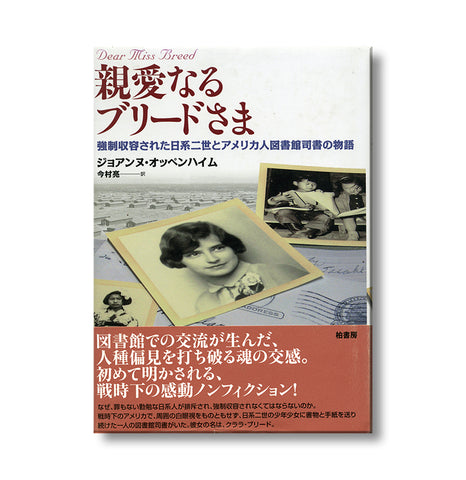
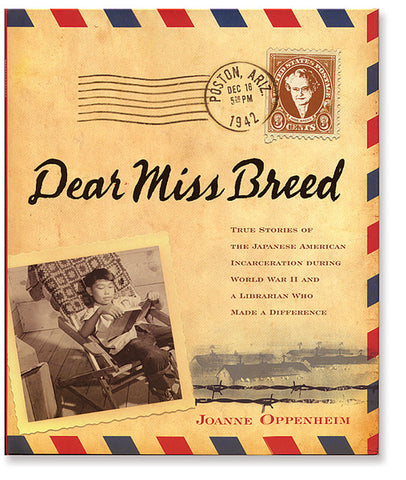
Dear Miss Breed: True Stories of the Japanese American Incarceration During World War II and a Librarian Who Made a Difference by Joanne Oppenheim tells the story of the remarkable and courageous librarian, Clara Estelle Breed, who was a loyal friend to the Nikkei during World War II. "Miss Breed," as the children knew her, was the first children's librarian at the San Diego Public Library, beginning in 1929. During the course of her work in the library, Clara befriended many Nikkei children and teens. The children participated in the library's summer reading program and frequently asked Miss Breed for book recommendations.
When war broke out in 1942, Clara's young Nikkei friends were sent with their families to relocation centers, and then on to concentration camps. When they left, Clara saw them off at the train station. She gave the children stamped and addressed postcards and made them promise to write to her. Clara corresponded with the children and teens throughout their stay in the camps. Although it must have been difficult on a librarian's salary, she also began to send books, small gifts and sundry supplies to them.

Dear Miss Breed tells the full story of the Japanese American internment as seen through the eyes of the youth in the camps. The children's letters add intimacy and detail to the story told by historical facts and the recollections of internees. The children shared the details of everyday life in the camp with Miss Breed; their observations and uncertainties as well as their small pleasures and hopes for the future. To date, only one letter written by Clara to one of her young correspondents has been found. Clara, however, kept the letters the children wrote to her. The children's letters are now in the collection of the Hirasaki National Resource Center of the Japanese American National Museum in Los Angeles.

Clara's dedicated friendship and generosity to the children in the camps, taken alone, is quite remarkable...but there is more to the story.

After the Japanese bombed Pearl Harbor in December 1941, many people in the United States distrusted and openly hated Japanese Americans. Many people (erroneously) believed that anyone of Japanese descent living in the U.S. - Issei and Nisei alike - were a dangerous threat to national security. Japanese Americans faced widespread discrimination and ridicule. Clara believed this was shamefully wrong and against the American ideals of freedom and democracy. She voiced her views publicly and wrote articles for professional library publications such as Library Journal and The Horn Book Magazine. In her articles, she shared excerpts of the children's letters from the camps, defended the loyalty of her friends and denounced the unjust incarceration of the Nikkei. She was especially concerned about how the incarceration was affecting the morale, self-esteem and attitudes of the children in the concentration camps.

"Democracy must be defended at home as well as abroad," wrote Clara in her article, "All But Blind," in the February 1, 1943, issue of Library Journal. (The full text of the article is available online)

Dear Miss Breed is an accessible account of World War II for children ages ten and up, and would be a wonderful guide to spark discussions with children about democracy, freedom, war and Nikkei history in America. Thoughtful parallels can be drawn between the events in Dear Miss Breed and events in our own times.


Learn more about Miss Breed...
The Japanese American National Museum has an online exhibition about Clara Breed that includes more information about the librarian, as well as several of the children's letters and other resources. It can be accessed at www.janm.org/exhibits/breed/title.htm. An award-winning video and accompanying teacher's guide, Dear Miss Breed, directed and edited by Veronica Ko, was produced by the National Museum as part of the Once Upon a Camp video series.

The story of Miss Breed has also reached national audiences through the Smithsonian Institution. The National Postal Museum borrowed letters from the National Museum's collection in mounting their 2001 exhibition titled Forwarding Address Required, which featured seventeen of the Miss Breed letters. The Smithsonian also prepared a lesson plan that used four of the Miss Breed letters as the basis for a lesson plan to teach about the internment experience ("Letters from the Japanese American Internment").

February 2006


pad
Dear Miss Breed: True Stories of the Japanese American Incarceration During World War II and a Librarian Who Made a Difference
padDear Miss Breed: True Stories of the Japanese American Incarceration During World War II and a Librarian Who Made a Difference
pad
$22.99
pad
Once Upon a Camp video series
padOnce Upon a Camp video series
pad
pad
pad
Camp Christmas Cards from the Miss Breed Collection
padCamp Christmas Cards from the Miss Breed Collection
pad
$3.25
pad
National Museum Magazine Back Issues
padNational Museum Magazine Back Issues
pad
$2.50
pad

CURRENT MEMBERS OF THE NATIONAL MUSEUM ENJOY A 10% DISCOUNT ON PURCHASES! Just type in your membership number and expiration date when prompted on the order form. You can join or renew your membership online!! You will receive your member discount on any purchases made on the same order. See the contributions section for more information or other ways to support our programs.